
When companies plan a big meeting, training, conference, or gala, most people focus on the guest list, the venue, and the food. But what people remember most often isn’t the chicken or the ballroom carpet. It’s how the event felt.
Could they hear the speaker clearly?
Did the screens work?
Was the lighting professional or distracting?
Did the program flow smoothly?
That’s where corporate event production comes in.
What is corporate event production? Corporate event production is the planning, coordination, and execution of the technical and visual parts of a business event. It includes sound, lighting, video, staging, screens, and the team that runs everything behind the scenes.
If you’re planning a corporate event and aren’t sure what production really includes, this guide breaks it down.
What Is Corporate Event Production?
Corporate event production is the process of designing and managing the technical side of a business event.
It covers:
- Audio (microphones, speakers, sound systems)
- Visual (projectors, LED walls, screens, video playback)
- Lighting (stage lighting, uplighting, room lighting)
- Staging (platforms, risers, podiums, pipe and drape)
- Event technology (presentation switching, livestreaming, recording)
- On-site technicians to operate everything
In simple terms, corporate event production makes sure your audience can see, hear, and understand what’s happening. It also makes sure the event looks polished and professional.
What are the Different Types of Corporate Events?
Corporate event production applies to many types of business gatherings, including:
- Company-wide meetings
- Sales conferences
- Leadership retreats
- Corporate trainings
- Product launches
- Award ceremonies
- Investor meetings
- Fundraisers and galas
- Trade show presentations
If your event involves speakers, presentations, screens, lighting, or an audience, you need corporate event production.
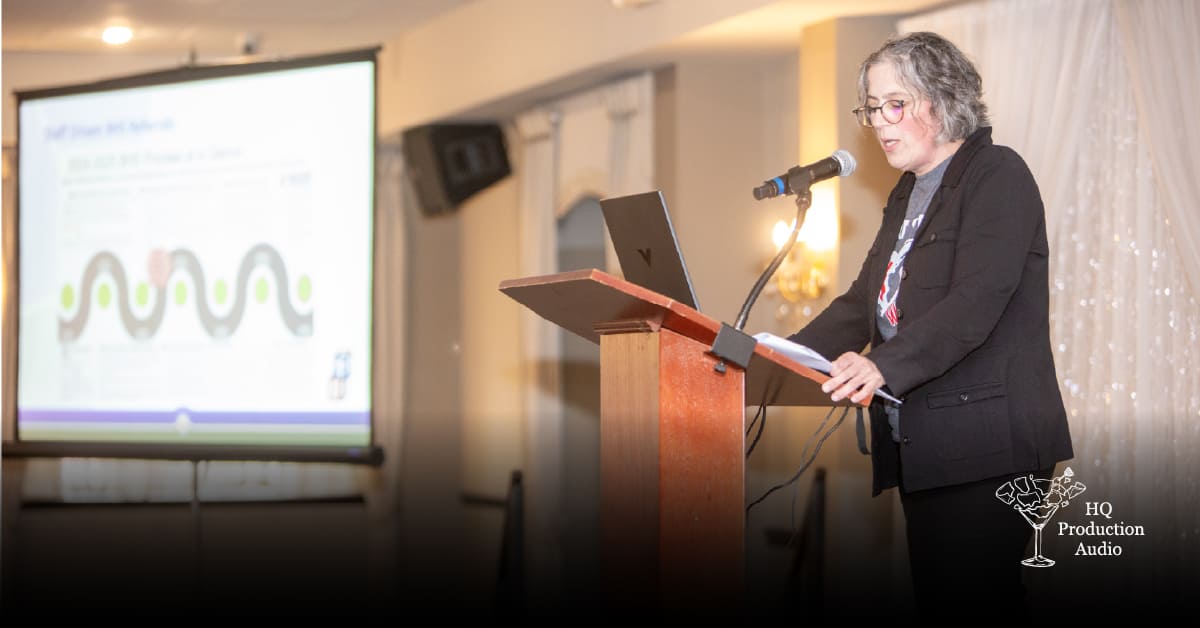
Why Corporate Event Production Matters
Some companies assume they can “just plug into the venue system” or handle AV internally. Sometimes that works for very small meetings. Often, it creates problems.
Here’s why event production matters.
1. Your Message Must Be Heard Clearly
If attendees can’t hear the speaker clearly, your event fails.
Poor sound causes:
- Audience frustration
- Disengagement
- Repeated questions
- Loss of credibility
Corporate event production ensures:
- Proper microphone selection
- Balanced speaker placement
- Clear, even sound throughout the room
- No feedback or echo
Sound is the most important element. If people can’t hear, nothing else matters.
2. Visuals Reinforce Your Brand
Your slides, videos, and branding should look sharp.
Production professionals handle:
- Correct screen sizing for the room
- Proper brightness and resolution
- Video playback without glitches
- Seamless transitions between speakers
A dim projector or distorted screen can make even strong content look unprofessional. Corporate event production ensures your visuals match your brand quality.
3. Lighting Sets the Tone
Lighting affects mood more than people realize. Flat overhead lighting feels dull. Well-designed lighting feels intentional.
Corporate event production includes:
- Stage lighting that highlights speakers
- Uplighting to enhance the room color
- Proper lighting for video recording and streaming
- Adjustments for different segments of the program
Lighting can elevate a corporate event from ordinary to special.
4. Events Need Structure and Flow
An event is more than equipment. It’s timing.
Production teams manage:
- Speaker transitions
- Video cues
- Walk-up music
- Slide advancement
- Countdown timers
- Livestream switching
Without coordination, events feel chaotic. Corporate event production ensures the program flows smoothly from start to finish.
5. Technical Problems Damage Credibility
Few things damage confidence faster than:
- A microphone cutting out
- A video that won’t play
- A screen that goes black
- A speaker asking, “Can you hear me?”
Production teams plan for:
- Backup equipment
- Redundant systems
- On-site troubleshooting
- Real-time adjustments
Good production makes problems invisible to the audience.
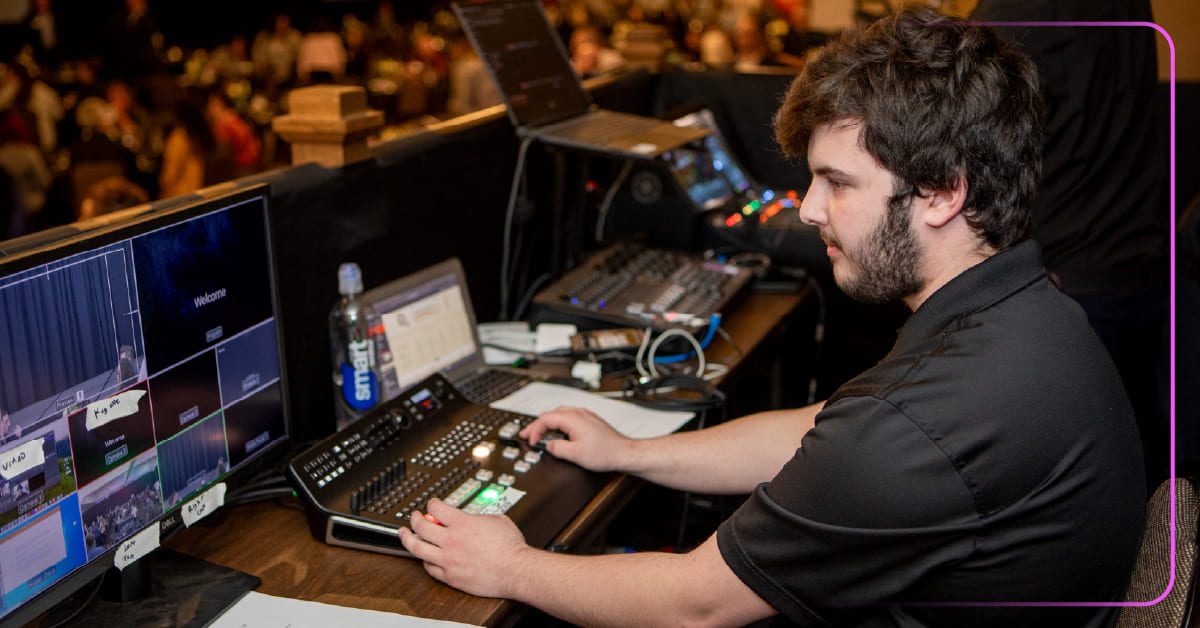
What Does a Corporate Event Production Company Actually Do?
A production company does more than just drop off equipment. A professional corporate event production team typically handles:
Pre-Event Planning
- Reviewing your agenda
- Assessing the venue
- Determining room layout
- Designing sound coverage
- Planning lighting placement
- Confirming power requirements
- Coordinating with venue staff
Equipment Setup
- Delivering equipment
- Building staging
- Running cables safely
- Testing microphones
- Calibrating screens and lighting
Rehearsal Support
- Speaker mic testing
- Slide checks
- Video playback testing
- Timing review
Event Execution
- Running sound
- Switching video
- Managing lighting changes
- Coordinating transitions
- Handling last-minute changes
Post-Event Breakdown
- Equipment removal
- Resetting the venue
- Secure load-out
Corporate event production is both technical and logistical.

Corporate Event Production versus Event Planning
These roles are different but connected.
Event planners focus on:
- Guest lists
- Catering
- Venue contracts
- Registration
- Décor
- Program structure
Event production teams focus on:
- Sound
- Lighting
- Screens
- Staging
- Technical timing
- Execution
Both roles are necessary for a successful corporate event.
When Should You Involve a Corporate Event Production Team?
Early. One of the biggest mistakes companies make is calling production too late.
Production should be involved when:
- You’re selecting a venue
- You’re determining the room layout
- You’re building the event schedule
- You’re budgeting
Why?
Because:
- Room size affects sound system design
- Ceiling height affects lighting
- Screen placement affects seating
- Agenda timing affects technical transitions
Bringing production in early prevents costly changes later.
Common Mistakes
Understanding common errors helps you avoid them.
- Waiting too long to book: High-quality production teams book out, especially during busy seasons.
- Underestimating sound needs: Larger rooms need distributed sound, not just two speakers up front.
- Ignoring rehearsals: Even experienced speakers need mic and slide checks.
- Overloading slides: Complex animations increase technical risk.
- Assuming in-house venue AV is enough: In-house systems often cover basic needs, but may lack:
- Proper lighting
- Custom staging
- Redundant systems
- Dedicated technicians
Corporate event production ensures your event doesn’t rely on minimal setups.
How Event Production Supports Business Goals
Corporate events aren’t only social gatherings. They serve business purposes.
Production supports:
- Clear Communication: Important announcements must be understood.
- Brand Perception: Professional production signals professionalism.
- Audience Engagement: Dynamic lighting, video, and pacing keep attention.
- Confidence: Smooth execution builds trust with employees, clients, or investors.
When done well, corporate event production supports your message instead of distracting from it.
Is Corporate Event Production Only for Large Events?
No. Even smaller events benefit from production support.
A 100-person training session still needs:
- Clear sound
- Visible slides
- Reliable microphones
- Smooth transitions
Scale affects equipment size, not the need for professional management.
How to Choose a Corporate Event Production Partner
When selecting a company for corporate event production, look for:
- Experience with business events
- Clear communication
- Transparent proposals
- On-site technical support
- Backup planning
- Ability to scale up or down
Ask questions such as:
- Who will be on-site?
- What happens if equipment fails?
- Do you conduct site visits?
- How do you handle last-minute changes?
Corporate event production is about partnership, not just equipment rental.
What Does Corporate Event Production Cost?
Costs vary based on:
- Event size
- Equipment needed
- Labor hours
- Complexity
- Venue requirements
- Livestream or recording needs
It’s best to view production as an investment in communication. Poor production can cost more in lost engagement and damaged perception than professional production ever would.
Corporate event production is not just about microphones and screens.
It’s about:
- Clear communication
- Professional presentation
- Seamless execution
- Audience engagement
- Protecting your brand reputation
When production is done well, most people don’t notice it. When it’s done poorly, everyone does.
If you’re planning a business event, corporate event production should be part of the conversation from the beginning. Our team at HQ Production Audio can help. Contact us today for a consultation.

Frequently Asked Questions About Corporate Event Production
What is included in corporate event production?
Corporate event production typically includes sound systems, microphones, screens, projectors or LED walls, lighting, staging, video playback, and on-site technicians who manage everything during the event.
Do small corporate meetings need event production?
Yes. Even small meetings benefit from professional sound, clear visuals, and technical support. The scale may be smaller, but the need for reliability remains the same.
When should I hire a corporate event production company?
As early as possible—ideally when selecting your venue or building your event schedule. Early involvement prevents technical and layout issues later.
What is the difference between venue AV and an event production company?
Venue AV often provides basic equipment. A corporate event production company designs a customized setup, provides experienced technicians, plans for backups, and manages the event’s technical flow from start to finish.
How much does corporate event production cost?
Costs depend on event size, equipment needs, labor time, and complexity. Pricing varies, but professional production protects your event from technical failures that can damage credibility.